
(832) 606-0844

FISHING GUIDES GALVESTON TEXAS
Topp Dogg Fishing Guides provides various types of private guided Galveston Fishing Guides for the entire Galveston Bay Complex. Most of these trips are bay outings for 1-4 anglers that target speckled trout and red fish. Seasonal trips and kid/family adventures are available at certain times of the year. Topp Dogg Fishing Guides can also handle multiple boats for corporate or tournament type events. It has been family owned by Capt. Alan Pereyra and Capt. Steven Pereyra since the year 2000. Both of these Captains have been very successful in this industry because of their excellent customers service and dedication to giving all their guest an exciting and memorable fishing experience. If you are looking to hire a Galveston Fishing Guide that has all the experience and fishing knowledge for the entire Galveston Bay waters that will maximize your fishing experience, then you need to give either Capt. Alan (832) 606-0844 or Capt. Steven (832) 659-1554 a call and reserve your trip today.
GOOGLE REVIEWS
 Captain Alan knows his fishing!! We went out with him Memorial Day morning. While most boats were struggling to get on the fish, we had already caught our limit. Great experience for us. We will use him again on our next trip to Galveston. Thanks Captain Alan.
If you're looking to catch fish, stop searching & just book with Captain Alan now!! Augie Bice
Captain Alan knows his fishing!! We went out with him Memorial Day morning. While most boats were struggling to get on the fish, we had already caught our limit. Great experience for us. We will use him again on our next trip to Galveston. Thanks Captain Alan.
If you're looking to catch fish, stop searching & just book with Captain Alan now!! Augie Bice
My wife and I went out with Capt. Steven. We had a great trip. We caught our boat limit by noon. Our average size was 21" specks and my wife caught a 25" speck. 4 x 1 gallon bags full of filets and smiles on our faces.
Capt. Steven was a fantastic guide. He put us right on fish, did all the dirty work, and even gave us some pointers we can use in the future.
I will absolutely be a repeat customer. Thank you for such a great trip and the great memories.
Bryan Miller
I was heading down to Galveston this past November & wanted to do some fishing while I was down. When I started looking for a service on the Internet, I found that it was a bit confusing. There were so many choices & different types of trips. After seeing Topp Dogg Fishing Guides over & over and reading their reviews, I decided to give Capt. Alan a call. I book a trip during the week fishing for trout & reds. The 1st thing I noticed was his courtesy. He was very nice & willing to teach. The 2nd thing was he really knows his stuff. He was able to put us on fish, once they stopped biting at one spot we found them at other spots. We had our limit 30 trout & 3 reds at the end of the day. The reason I decided to write this review is I want all of you to know who you should call for your trip. I know you will be satisfied. Capt. Alan has a client for life, we will be booking again soon.
Matt Delaney
SERVICES PROVIDED
• Private Guided Fishing Trips, Galveston TX
• Fishing Charters, Galveston TX
• Bay Fishing Trips, Galveston TX
• Seasonal Fishing Outings, Galveston TX
• A variety of fishing trips & charters from 1-4 anglers per boat and 1-25 boats for corporate events.
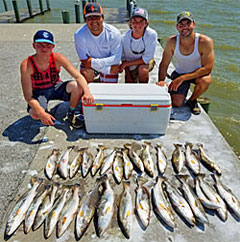
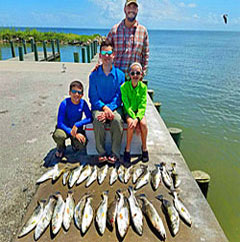
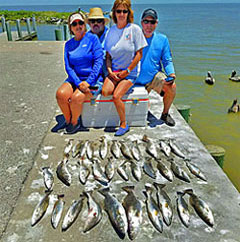
SERVING SURROUNDING LOCATIONS
Galveston, Texas City, San Leon, Dickinson, Santa Fe, Seabrook, League City, La Porte, Kemah, Clear Lake and Baytown.
Zip Codes served: 77554, 77553, 77552, 77551, 77550, 77590, 77539, 77565, 77058, 77598, 77571 and 77520.
NEAR BY PLACES
Restaurants:  GaidosSeafood Yamato MillersGrill Mario's Hotels: Candlewood Hilton Quality Inn
BUSINESS LOCATION
TOPP DOGG FISHING GUIDES
9301 Broadway St, Galveston, TX 77554
Capt. Alan (832) 606-0844
Capt. Steven (832) 659-1554
Website: www.galveston-fishing.com
Email Add: info@galveston-fishing.com
DIRECTIONS

BUSINESS OFFICE HOURS
Monday-Sunday 5:00am-10pm
We are open 24/7. You can call us any day any time. If we don't answer please leave a message and we will get back to you asap. We fish 7 days a week and we are off on certain holidays. Please give us a call if you have any questions.
ACCEPTED PAYMENTS
Topp Dogg Fishing Guides accepts all major credit cards, debit cards, bank cards, cash, local checks, Zelle and payment through PayPal. You can use PayPal for your initial trip deposit, the full payment or remaing payment. This website is a secure website with a SSL Certificate.

 (832) 606-0844
 2000-2019 All rights reserved by Topp Dogg Fishing Guides